Running a one-person business in Germany (2026): the complete toolkit
How to run a freelance business in Germany as a solo operator — the complete toolkit of tools and software for freelancers in Germany, from Freiberufler legal setup and banking to accounting, e-invoicing, hosting and insurance.

Solo operator · one-person venture studio in Europe (SEO · affiliate · micro-SaaS) · 12 June 2026 · updated 12 June 2026 · 7 min read

Most “how to freelance in Germany” guides stop at the paperwork. This one is the operational toolkit: the actual stack you run a one-person business on in Germany, layer by layer — and, crucially, which layers have to be German and which are pan-EU picks that work anywhere.
That distinction is the whole point. Your bank, accounting and insurance are bound to German rules — ELSTER, the Finanzamt, EÜR, statutory vs private health cover — so local tools win there. Your hosting, email and AI are not; the best European pick is the best pick whether you are in Berlin, Lisbon or Tallinn. Below, each need gets the German-specific reality, one top pick, and a link to the full comparison.
Treat the specifics here as approximate. German rules shift, and your situation is yours — verify with the Finanzamt or a Steuerberater before you rely on anything.
1. Legal setup: Freiberufler or Gewerbe
The first German decision is your category. A Freiberufler (liberal profession — writers, developers, designers, consultants, doctors) registers directly with the Finanzamt and skips trade tax and Gewerbe registration. A Gewerbe (a commercial trade) registers with the Gewerbeamt and pays Gewerbesteuer above an allowance. Most solo creatives and tech freelancers aim for Freiberufler status — but the Finanzamt decides, not you.
Many small freelancers also use the Kleinunternehmerregelung, which lets you skip charging VAT below a turnover threshold (handy early, limiting later). The full walk-through of who qualifies for what is in self-employed in Germany: Freiberufler/Kleinunternehmer.
2. Business bank account
German freelancers are not legally required to separate business and personal money the way a GmbH is — but doing so is the single biggest favour you can do your future tax self. A dedicated account keeps your EÜR clean and your Steuerberater cheap. The German-built accounts go further than a plain IBAN: they bundle tax estimates and accounting features around the freelancer’s actual workflow.
The top pick for solos is Kontist — a German business account designed around self-employment, with automatic tax set-aside and tight accounting integration.
Kontist
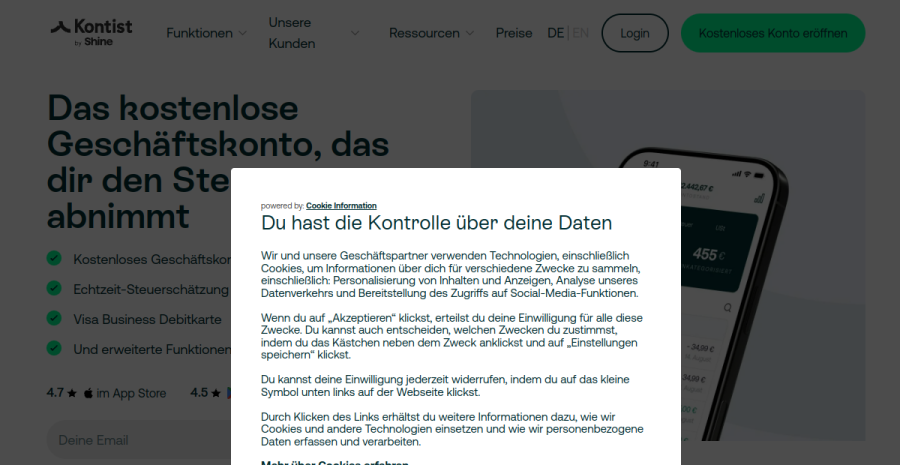
A German business account built for the self-employed: real-time tax estimates set money aside for you, and the books connect straight to accounting tools. English support is available, which makes it a common pick for internationals freelancing in Germany.
See how it stacks up against the alternatives in the German bank accounts roundup.
3. Accounting & taxes
This is where German freelancing gets real. Most one-person businesses file an EÜR (Einnahmenüberschussrechnung — a simple income-minus-expenses calculation) rather than full double-entry books, submit everything through ELSTER, and — unless you are a Kleinunternehmer — file periodic VAT pre-registrations (Umsatzsteuervoranmeldung). Software that knows these forms natively saves you both a fortune in Steuerberater hours and a lot of avoidable mistakes.
The top pick is sevDesk — a widely used German accounting tool that handles EÜR, VAT and ELSTER submissions, with an English interface for non-German speakers.
sevDesk
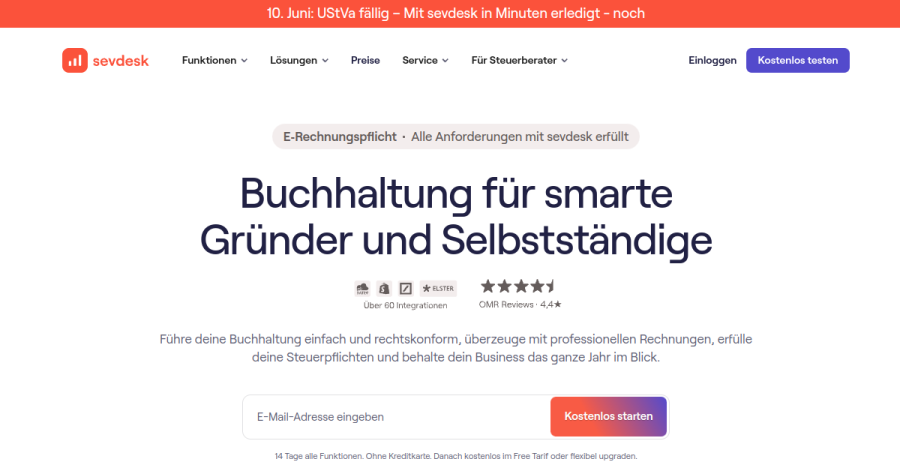
German accounting software that speaks the local forms: EÜR, Umsatzsteuervoranmeldung and ELSTER submissions, plus bank-feed reconciliation. Pairs neatly with a business account so transactions flow straight into your books, and offers an English UI.
The full comparison — including what to hand to your Steuerberater versus do yourself — is in the German accounting software roundup.
4. Invoicing & e-invoicing (the 2025 mandate)
Germany is rolling out mandatory B2B e-invoicing. Since the start of 2025, every business — including freelancers — must be able to receive structured electronic invoices (formats like XRechnung or ZUGFeRD), with the obligation to issue them phasing in over the following years for domestic B2B transactions. A PDF emailed to a client is no longer automatically a compliant e-invoice. The practical takeaway: pick invoicing software that can already create and accept these structured formats, so the mandate is a non-event for you rather than a scramble.
(Exact thresholds and deadlines are still settling — verify the current schedule before you assume a date applies to you.)
The tools that handle compliant invoicing for solos — German formats included — are in the invoicing & accounting roundup.
5. Website & hosting
Your category and your bank are German; your website is not. Hosting is a pan-EU decision, and the only Germany-flavoured nuances are preferring EU/German data-centre locations and a GDPR-friendly host — both easy to satisfy. Pick on speed, price and ease, not nationality.
The top pick for a lean solo site is Hostinger — cheap, fast, beginner-friendly, with EU data-centre options (the full Hostinger review has the detail).
Hostinger
Budget-friendly hosting that is genuinely fast and easy to set up, with EU data-centre locations and a managed WordPress option. A sensible default for a one-person business that just needs a reliable home on the web without overpaying.
Compare it against the rest in the web hosting for solopreneurs in Europe roundup.
6. Email & audience
An email list is the one asset that survives a pivot — and for a German business it pays to keep subscriber data inside the EU and run double opt-in, both for GDPR comfort and because “EU-hosted” is increasingly what your audience wants too. This is a pan-EU layer, but the EU-hosted angle makes some tools a better fit than others.
The top pick is Brevo — EU-hosted (French), GDPR-friendly, with a usable free tier.
Brevo
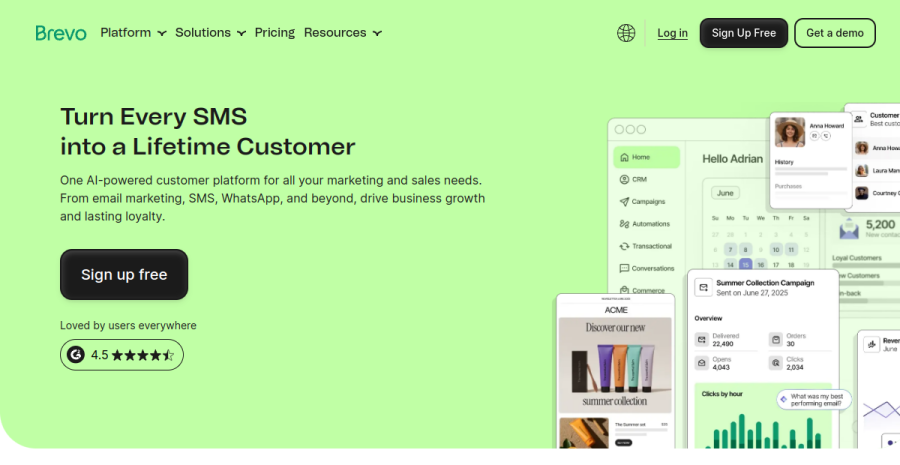
A French, EU-hosted email and marketing platform that keeps subscriber data inside the EU and supports double opt-in out of the box — a clean fit for a German one-person business. The free tier is generous enough to start an audience before you pay a cent.
The full line-up, including which tools keep data in the EU, is in the email marketing roundup.
7. Insurance & pension
This layer is very German and very easy to ignore until it bites. As a freelancer you choose between statutory (GKV) and private (PKV) health insurance, with no employer splitting the bill — and unless you fall under a special scheme (like the Künstlersozialkasse for artists and publicists, which subsidises your contributions), pension provision is on you. Sorting cover early is part of running the business, not an afterthought.
The top pick for internationals is Feather — English-speaking insurance built for expats and freelancers in Germany.
Feather
Insurance designed for internationals in Germany, explained in plain English: public and private health, liability and more, without the German-bureaucracy headache. A common starting point for freelancers who want cover sorted without a German-only broker.
The wider picture — including pension options and the KSK — is in insurance & pension for the self-employed.
8. AI & productivity
The final layer is the most portable of all. AI assistants, writing tools, project trackers and note systems have nothing Germany-specific about them — the best European-friendly pick is the best pick everywhere. This is where a single person genuinely carries the work of a small team, so choose a couple of tools that replace real work and stop there.
The current line-up for solos is in the AI tools roundup.
Geo note: what is German, what is pan-EU
The shape of a German one-person business stack is simple once you see the split:
- German by necessity — your bank (Kontist), accounting (sevDesk) and insurance (Feather) are bound to German rules: ELSTER, EÜR, the Finanzamt, GKV/PKV. Use local tools here.
- Pan-EU, works anywhere — your hosting (Hostinger), email (Brevo) and AI picks are not Germany-specific. The best European-friendly option is the right one whether you operate from Munich or Madrid.
Get the German layers right, lean on the pan-EU ones, and keep verifying the specifics — rules and thresholds here move. For the country-agnostic master version of this stack, work up one level to how to start and run a one-person business in Europe.
This is the German hub — each need links to its full comparison or guide. Bookmark it, and treat every figure and deadline as “approximately right, verify before you rely on it.”
The E-Rechnung calendar and the Kleinunternehmer exemption: Germany e-invoicing for freelancers.
Part of the complete EU admin guide for solopreneurs.
Frequently asked questions
How do I run a freelance business in Germany?
What software and tools do German freelancers need?
What is the best bank and accounting setup for a Freiberufler?
Do I need German-language tools or are there English ones?
Keep reading
Running a one-person business in France (2026): the complete toolkit
How to run a freelance business in France as a solo operator — the complete toolkit of tools for freelancers in France, from micro-entrepreneur legal setup and banking to accounting, e-invoicing, hosting and insurance.
Running a one-person business in Spain (2026): the complete toolkit
How to run a freelance business in Spain as a solo operator — the complete toolkit of tools and software for autónomos in Spain, from alta de autónomo and banking to accounting, e-invoicing (Verifactu), hosting and insurance.
Kontist vs Holvi (2026): which business account for a German freelancer?
Kontist vs Holvi compared for German freelancers and Selbstständige — Kontist for tax-native banking (real-time income-tax and VAT set-aside, DATEV/ELSTER export), Holvi for banking and invoicing in one simple account. Which Geschäftskonto fits, honestly.
Everything here is free. If something saved you time, you can support the author — no product, no signup.