Kajabi vs Systeme.io for course creators & solopreneurs (2026)
Kajabi vs Systeme.io for a one-person course business — the premium, polished all-in-one versus the budget all-in-one with a genuinely generous free tier. The honest price-versus-polish trade-off, who each suits, and the lock-in nobody warns you about. From a team of one.

Solo operator · one-person venture studio in Europe (SEO · affiliate · micro-SaaS) · 6 July 2026 · updated 6 July 2026 · 6 min read

If you sell what you know, one platform ends up running most of your business — the course, the sales pages, the email list, the checkout, maybe a membership. Two names dominate the “all-in-one” slot, and they sit at opposite ends of it. Kajabi is the premium end: a polished, powerful, cohesive platform positioned as the high-end home for knowledge commerce. Systeme.io is the budget end: the same jobs covered for a fraction of the cost, with a genuinely generous free tier. They look like rivals, but the real question isn’t “which is better” — it’s which trade-off suits your stage. For the wider field, see the best course platforms for solopreneurs roundup, or the standalone Systeme.io review for the budget pick on its own.
The trade-off at a glance
| Kajabi | Systeme.io | |
|---|---|---|
| Position | Premium high-end all-in-one | Budget all-in-one, huge value |
| Covers | Courses, memberships, email, funnels, site | Courses, funnels, email, affiliates |
| Polish | High — cohesive, refined | Functional — value over finish |
| Free tier | No (premium, paid) | Yes — notably generous |
| Depth | Deeper, more considered | Broad, sometimes shallower |
| Setup effort | Low — everything ready | Low — everything ready |
| Best for | Established creators with budget | Bootstrappers launching cheaply |
| Price (indicative) | Premium | Free to start · low paid tiers |
The single sentence that decides it: Kajabi sells polish and cohesion to creators who are already earning; Systeme.io sells the same surface, cheaply, to creators who are starting out. Almost everything else follows from that.
Kajabi
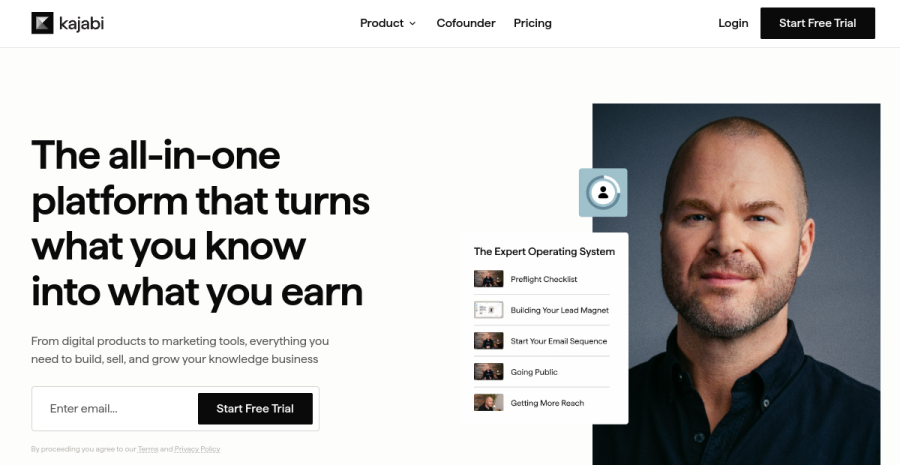
Kajabi is the high-end option, and it feels like it. Courses, memberships, email marketing, sales funnels and a full website live in one platform that hangs together as a single, considered product rather than a bag of bolted-on modules. For an established creator that cohesion is the whole appeal: you build a polished course, wrap it in a decent funnel, run your email from the same login, and the pieces are designed to work together. The learning and membership experiences are refined, and you rarely feel like you’re fighting the tool.
The cost of that is, plainly, cost. Kajabi requires an active premium subscription with no free tier, so it only makes sense once you’re making real money and will actually use the breadth you’re paying for. It’s a lot of platform — and a lot of monthly fee — to carry for an unvalidated idea.
Pros: polished and cohesive; genuinely all-in-one (courses, memberships, email, funnels, site); refined membership and course experience; one premium home for a real knowledge business. Cons: expensive; no free tier; overkill and hard to justify pre-revenue; you’re paying for depth you must actually use.
Best for: established creators with the budget and the revenue to use a premium all-in-one fully.
Systeme.io
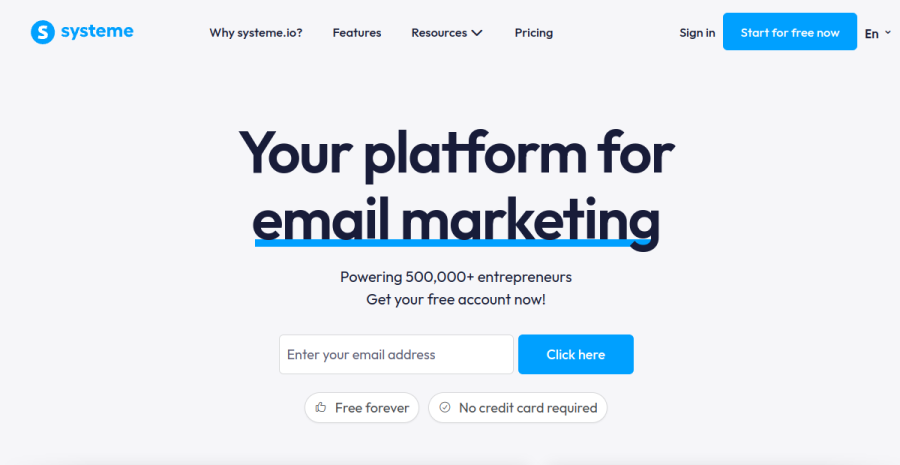
Systeme.io is the opposite philosophy: cover the same jobs for as little as possible, and give away a real free tier to prove it. Courses, sales funnels, email and even an affiliate programme sit in one login — and the free plan is generous enough that you can build a course, wire a funnel and take genuine sales before paying a cent. For a bootstrapper, that’s the pitch that matters: you can go from idea to first customer without a subscription, then upgrade only once money is coming in.
The trade-off is polish and depth. The interface is functional rather than beautiful, some features are shallower than a specialist tool would offer, and it doesn’t feel as cohesive or refined as the premium end. None of that is disqualifying — for launching cheaply it’s remarkable value — but it’s the price of the price.
Pros: notably generous free tier; whole funnel in one login; low paid tiers as you grow; remarkable value for a bootstrapper. Cons: less polished; some features shallower; interface is functional over refined; you’ll hit limits and upgrade as you scale.
Best for: bootstrappers and starters who want to launch a course business cheaply and validate before spending.
Which should you choose
Map it to your stage, not to a feature count:
- You’re already earning from what you sell, and want one polished premium home you’ll use fully. Kajabi. The cohesion and refinement pay off when the revenue is there to justify them.
- You’re bootstrapping and want to launch and validate cheaply. Systeme.io. The generous free tier means a first sale before a first invoice.
- You want memberships and a refined community experience as a core part of the offer. Kajabi leans into that end more comfortably.
- You want the whole funnel — page, email, checkout, course — in one login for the least money. Systeme.io covers it and starts free.
- You’re pre-first-sale on an unvalidated idea. Start on Systeme.io — paying premium before you’ve proven demand is the classic mistake.
For the how-to around either platform, the mechanics of launching are in how to sell online courses solo, and the wider stage-by-stage picture lives in the creators hub.
The bottom line
There’s no wrong answer here — which is why they land close, at 4.3, as two good tools for different stages. Kajabi trades money for polish, cohesion and a premium all-in-one that established creators can use fully. Systeme.io trades polish for value, with a genuinely generous free tier that gets a bootstrapper to a first sale for almost nothing. Decide which cost you’d rather pay at your stage, and the platform picks itself. If you’re unsure and pre-revenue, start on Systeme.io — launching cheaply and validating demand is the one choice that’s hard to regret, and you can graduate to Kajabi once the revenue clearly justifies the premium. For where each sits among the alternatives, see the full best course platforms for solopreneurs comparison.
Try Kajabi → Start free with Systeme.io →
The verdict
- Kajabi — the premium, polished all-in-one. Best for established creators with the budget and revenue to use it fully. Expensive, no free tier, but cohesive and refined.
- Systeme.io — the budget all-in-one with a notably generous free tier. Best for bootstrappers who want to launch and validate cheaply. Less polished, some shallower features, but remarkable value.
- The deciding question is your stage, not the feature list. Pre-revenue: start free on Systeme.io. Already earning and want one premium home: Kajabi.
- Mind the lock-in. Neither exports cleanly into the other — keep your own backups of content and your email list, and treat any later migration as a deliberate rebuild.
- Pricing is indicative for 2026 — confirm current plans on each vendor’s page before you commit.
Frequently asked questions
Kajabi or Systeme.io — which is better for a course creator?
Is Systeme.io really free, and what is the catch?
Why is Kajabi so expensive compared to Systeme.io?
Can I move from Systeme.io to Kajabi later, or am I locked in?
Keep reading
Teachable vs Thinkific for course creators (2026)
Teachable vs Thinkific for a one-person course business — the fast, simple platform with built-in payments versus the flexible, customisable one with a strong free plan. The honest ease-versus-control trade-off, the free tiers, who handles your tax, and who each suits. From a team of one.
Make vs Zapier for solopreneurs (2026): which automation tool to pick
Make vs Zapier for a one-person business — the polished market leader with the widest app library versus the visual scenario builder that goes further for less at volume. The honest fit-comparison, who each suits, the cost-at-scale angle, and where n8n fits. From a team of one.
Pipedrive vs HubSpot for solopreneurs (2026): which CRM fits a team of one
Pipedrive vs HubSpot for a one-person business — a lean, visual sales-pipeline CRM versus a broad platform with a genuinely capable free tier. The honest fit-comparison for a solo, who each suits, and the over-tooling trap to avoid. From a team of one.
Everything here is free. If something saved you time, you can support the author — no product, no signup.