GDPR analytics in the EU (2026): the best GDPR-compliant Google Analytics alternatives
Privacy-first analytics are not just compliant — they are more accurate (no consent-banner data loss) and faster (better Core Web Vitals). The best cookieless, EU-friendly Google Analytics alternatives for solopreneurs, compared.

Solo operator · one-person venture studio in Europe (SEO · affiliate · micro-SaaS) · 19 June 2026 · updated 19 June 2026 · 5 min read

Here’s a counter-intuitive truth for an EU solopreneur: switching off Google Analytics usually gives you better data, not worse. GA4’s consent banner is rejected by an estimated 40–60% of EU visitors, so your numbers are structurally incomplete — and its EU legal status has been a moving target. Privacy-first analytics fix both: they’re cookieless (no banner, so you see ~100% of visitors), genuinely EU-compliant, and their tiny scripts even help your page speed — which helps SEO. The EU constraint becomes an EU advantage.
How I evaluated these. For a solo, an analytics tool should be: compliant without a consent banner, accurate (sees all visitors), light (good for Core Web Vitals), and simple enough to actually read. Enterprise feature depth is optional; not slowing your site and not losing half your data is not.
The shortlist at a glance
| Tool | Best for | Cookieless / no banner | Hosting |
|---|---|---|---|
| Plausible | The simple default | ✅ | EU-hosted (or self-host) |
| Fathom | Simple + polished app | ✅ | Cloud (EU isolation option) |
| Matomo | Full GA replacement | ✅ (no-cookie mode) | Self-host (free) or cloud |
| Simple Analytics | Minimal + privacy | ✅ | Cloud (EU) |
EU hosting, and why it is the deciding question
The practical question behind every “is this GDPR compliant?” search is where the data lands. A US-owned tool can be lawful with the right transfer mechanism, but you carry the paperwork and the risk of the mechanism changing. An EU-hosted tool removes the question from your desk — which is why, for a one-person business with no legal budget, EU hosting is worth more than a feature.
Three ways to get it, in increasing order of effort: pick a tool that hosts in the EU by default (Plausible hosts in the EU; Simple Analytics is Dutch); self-host Matomo on an EU server, which gives you ownership of the raw data and a server to maintain; or run no third-party analytics at all and log hits yourself — what this site does, and the reason there is no consent banner on the page you are reading.
If you also need the consent layer for ads, embeds or anything that does set cookies, that is a separate tool and a separate decision: see the cookie-consent comparison.
1. Plausible — the best simple default
Plausible

Open-source, EU-hosted (Germany), cookieless, and a script under ~1KB — Plausible gives you the numbers that actually matter (visitors, sources, top pages, conversions) on one clean dashboard, with no consent banner needed in most EU setups. The light script is a real SEO bonus: less weight, better Core Web Vitals.
Pros: open-source; EU-hosted; cookieless/no banner; tiny script; clear, no-bloat dashboard. Cons: intentionally simple (no heatmaps/session replay); paid cloud (self-hosting is free but is your responsibility).
Best for: the majority of solos who want compliant, accurate, readable analytics with zero fuss.
2. Fathom — simple, with a polished app
Fathom Analytics
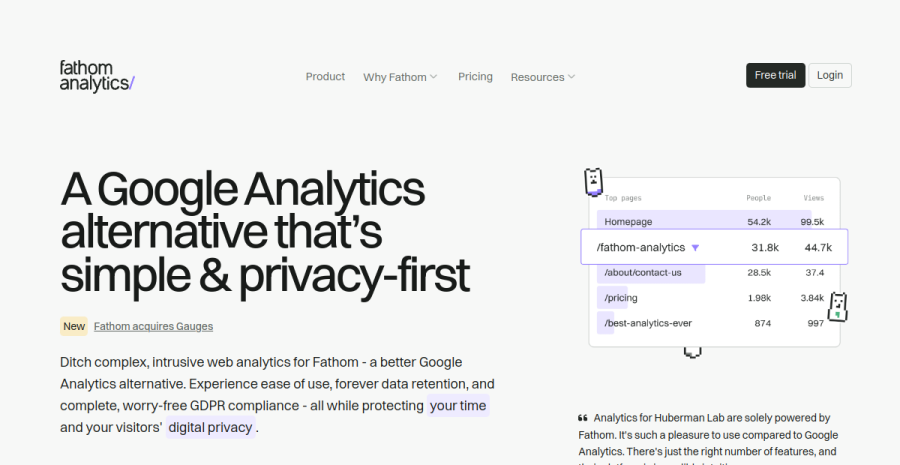
Fathom offers the same privacy-first, cookieless, no-banner approach with an especially polished app and fast dashboards, plus EU-data-isolation options. If you like Plausible’s philosophy but want a more refined interface (and there’s a referral programme behind it), Fathom is the pick.
Pros: privacy-first/cookieless; clean, fast app; EU isolation; simple pricing. Cons: paid only; like Plausible, deliberately lighter on advanced features.
Best for: solos who want simplicity with a more polished product experience.
3. Matomo — the full Google Analytics replacement
Matomo
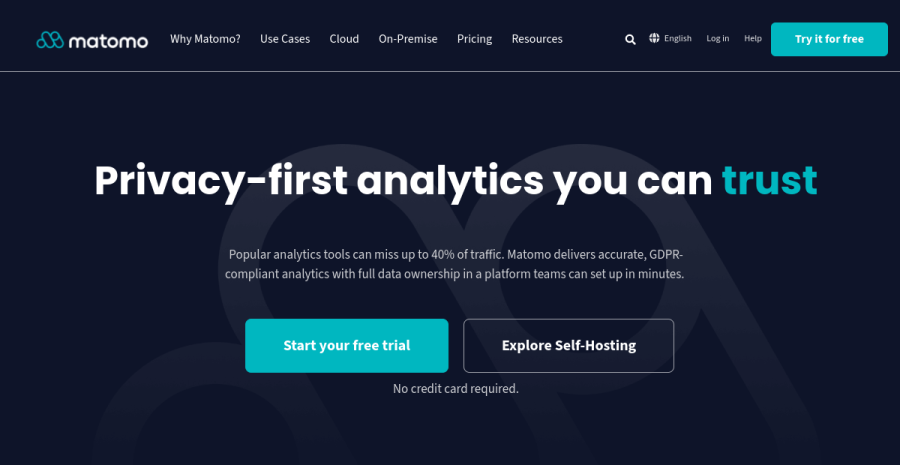
When you genuinely need GA-level depth — funnels, heatmaps, session recordings, a GA importer — Matomo is the most complete privacy-respecting option. Self-host it for free (no-cookie mode needs no banner) or use the paid cloud. The trade-off is more to set up and maintain.
Pros: full feature set; GA importer; self-host = free + full data ownership; no-cookie mode. Cons: heavier; self-hosting is real maintenance; more than most solos need.
Best for: solos who need real analytical depth or full data ownership.
4. Simple Analytics — the minimalist
Simple Analytics
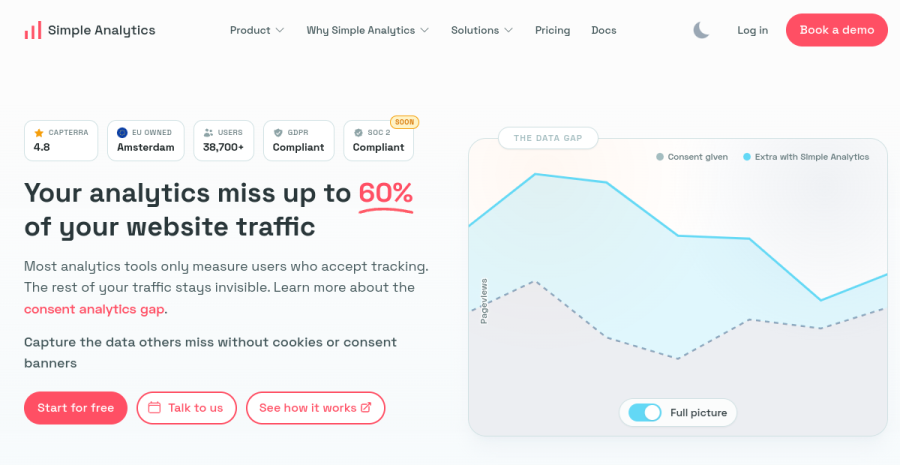
A clean, privacy-first, EU-friendly option focused on the essentials (and adding AI summaries). Another solid no-banner choice if Plausible/Fathom aren’t quite your fit.
Pros: minimal and privacy-first; cookieless; EU-hosted. Cons: smaller ecosystem; essentials-focused.
Best for: solos who want the absolute minimum, done privately.
How to choose
| If you want… | Use |
|---|---|
| Compliant, accurate, simple (default) | Plausible |
| The same, with a polished app | Fathom |
| A full GA replacement / data ownership | Matomo (self-host) |
| The bare minimum, privately | Simple Analytics |
Why this is an EU advantage, not a compromise
A privacy-first tool isn’t just the safe choice — it’s the better one for an EU solo: you see ~100% of visitors (no consent-banner data loss), you’re compliant without legal headaches, and the lighter script improves Core Web Vitals — which feeds SEO and getting found. If you’re running a content or affiliate site, accurate analytics on every visitor directly improves the decisions that grow it.
Bottom line
For most solopreneurs, Plausible is the best default — compliant, accurate, fast and simple. Fathom for the same with a polished app, Matomo when you need full GA-level depth (free self-hosted). Switching off GA in the EU usually means cleaner data and a faster site — and often lets you drop the cookie banner entirely. The wider picture is in GDPR for solopreneurs; if you do still run trackers, see the best cookie-consent tools for EU sites.
Frequently asked questions
Is Google Analytics GDPR compliant?
What is the best cookieless analytics tool?
Do I need a cookie consent banner with privacy analytics?
Plausible vs Fathom vs Matomo — which should I pick?
Keep reading
Best AI customer support tools for solopreneurs (2026): chatbots & live chat, honestly
For a one-person business the real question isn't 'which live chat' — it's whether you need chat at all, or an AI trained on your docs plus a great FAQ. Crisp, Tidio, Chatbase, Intercom and the free options compared, with the EU angle: a chat log is personal data.
GDPR for solopreneurs (2026): the practical, non-paralysing guide
You run a one-person business, not a data giant — but GDPR still applies the moment you have a contact form, an email list or analytics. What a solo actually has to do to be compliant, without a legal team: lawful basis, privacy policy, cookie consent, data rights, processors and EU-friendly tools.
Best cookie consent tools for EU sites (2026)
If your site uses analytics or ad trackers, EU law needs a consent banner that blocks them until visitors agree. The best cookie-consent (CMP) tools for a solo — Cookiebot, CookieFirst, Complianz, Usercentrics and Osano compared — plus the honest option of needing no banner at all.
Everything here is free. If something saved you time, you can support the author — no product, no signup.