Best accounting software for Italian freelancers & partita IVA (2026): Fiscozen vs Fatture in Cloud
The best accounting software for Italian freelancers — Fiscozen, Fatture in Cloud, Aruba and Qonto compared. Regime forfettario-friendly, FatturaPA/SdI-ready e-invoicing, and an honest look at which tools work in English for expats.

Solo operator · one-person venture studio in Europe (SEO · affiliate · micro-SaaS) · 19 June 2026 · updated 19 June 2026 · 11 min read

If you are freelancing in Italy — whether you are a long-time partita IVA, a new forfettario, or an expat who just opened your VAT number — the accounting setup you pick is not a cosmetic choice. Italy made electronic invoicing through SdI mandatory for essentially everyone, forfettari included, so a plain PDF is no longer a valid invoice. The right tool turns that mandate, plus your flat-tax filings and INPS contributions, into a few clicks instead of a recurring headache; the wrong one (or none) means a relationship with the Agenzia delle Entrate you do not want.
How I evaluated these. I judged each tool on what actually matters to a solo partita IVA in Italy, not a US-centric feature list:
- FatturaPA / SdI — does it issue and receive structured fattura elettronica through the Sistema di Interscambio? In Italy this is non-negotiable.
- Regime forfettario — does it produce forfettario-compliant invoices (no VAT, correct legal wording), track the €85,000 ceiling, and handle the flat imposta sostitutiva?
- Tax + INPS — does it help with the annual dichiarazione dei redditi, the substitute tax, and INPS (Gestione Separata or artigiani/commercianti) contributions — or just invoicing?
- Commercialista — is a real accountant included or easy to plug in? Many forfettari still want a human on the annual return.
- English support — can an expat run the whole thing, and get help, in English?
Tax figures and thresholds below are approximate 2026 public numbers — always verify current rates with the vendor or a commercialista before you rely on them.
At a glance
| Tool | Language | SdI / FatturaPA | Forfettario | Commercialista | English | From |
|---|---|---|---|---|---|---|
| Fiscozen | English + Italian | ✅ | ✅ specialist | ✅ included | ✅ | ~€30+/mo |
| Fatture in Cloud | Italian | ✅ | ✅ | ➕ add-on/partner | ⚠️ | ~€5–25/mo |
| Aruba | Italian | ✅ | ✅ (invoicing) | ❌ | ⚠️ | ~€1–25/yr+ |
| Qonto | English + Italian | ✅ | ➖ invoicing only | ➕ integrations | ✅ | ~€9–30/mo |
1. Fiscozen — the done-for-you winner (forfettario & expats)
Fiscozen
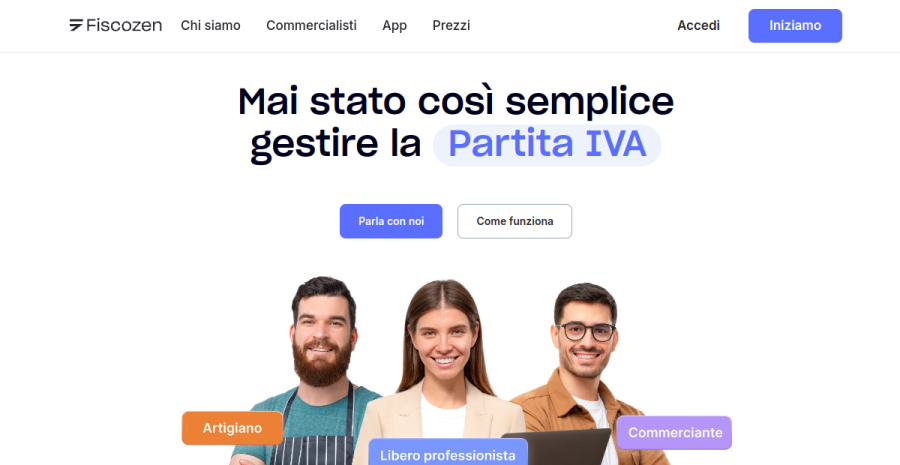
Fiscozen is the tool I reach for first when an Italian freelancer — especially a forfettario or an expat — wants the tax to simply be handled. It pairs a clean app with a real, dedicated commercialista, so you get software and a human who manages your partita IVA end to end: opening it if you do not have one, issuing SdI e-invoices, calculating the flat imposta sostitutiva and INPS, and filing your annual return.
Built around the forfettario. It tracks the €85,000 ceiling, applies your ATECO coefficient, and issues forfettario-correct invoices (no VAT, right legal wording) automatically — the exact things a new flat-rate freelancer gets wrong alone.
The expat angle. The whole thing runs in English with an English-speaking accountant. For a non-Italian speaker, that translation layer is the product: you file real Italian taxes without decoding tax Italian or paying a local commercialista for every five-minute question.
Worked example. A Milan-based expat consultant on the forfettario, first year of activity (so the 5% rate), sends ~8 invoices a month. Fiscozen issues them through SdI, tracks the ceiling, computes the substitute tax and INPS, and files the dichiarazione — in English. Cost: roughly €30–40/month, far below a traditional commercialista’s retainer. Verify the current plan.
Pros: real commercialista included; English-first; forfettario specialist; full SdI; opens your partita IVA for you; predictable flat fee. Cons: more expensive than pure software (you are paying for the accountant); focused on the solo/forfettario case rather than complex companies.
2. Fatture in Cloud — the market-leading software (do-it-yourself)
Fatture in Cloud
Fatture in Cloud (part of TeamSystem, one of Italy’s biggest software houses) is the default when you want to run the books yourself rather than hand them to someone. It is the most widely used Italian invoicing-and-accounting SaaS, with SdI e-invoicing built in, and a huge ecosystem of integrations and commercialisti who already work with it.
SdI and forfettario, handled. It issues and receives fattura elettronica through SdI, supports the regime forfettario (VAT-free invoices with the correct wording, ceiling tracking), and manages quotes, recurring invoices, expenses and payment links — the full solo workflow.
Plug in an accountant when you want one. Because so many commercialisti use it, you can keep doing the day-to-day invoicing yourself and share access for the annual return — the handover is smooth precisely because the tool is so common.
Worked example. A Bologna freelance developer on the forfettario sends ~15 invoices a month and tracks expenses. Fatture in Cloud issues each through SdI, watches the €85k ceiling, and exports cleanly to their commercialista at year end. Cost: roughly €8–25/month by tier — verify current pricing.
Pros: market leader, mature and reliable; SdI built in; large integration and accountant ecosystem; covers the full solo workflow; affordable tiers. Cons: Italian-language interface — a barrier for expats; you are doing the bookkeeping yourself (no accountant unless you add one); deeper features are more than a light freelancer needs.
3. Aruba — the cheapest reliable SdI e-invoicing
Aruba Fatturazione Elettronica
Aruba is the budget answer to the one thing every Italian partita IVA must do: issue and receive FatturaPA e-invoices through SdI. From one of Italy’s largest hosting and digital-services providers, its Fatturazione Elettronica service is known for being cheap and dependable — if your needs are mostly “send compliant e-invoices without paying much,” it is hard to beat on price.
What you get. SdI issuing and receiving, conservazione a norma (the legally required long-term digital storage of e-invoices), forfettario-compatible invoicing, and the basics — at a fraction of a full accounting suite’s cost.
Where to be careful. It is more an e-invoicing and compliance tool than a full bookkeeping suite — lighter on expense management, reporting and tax preparation than Fatture in Cloud, and the interface is Italian. For a forfettario whose accounting is genuinely simple, that is exactly enough; if you want richer bookkeeping or an accountant in the loop, look higher up this list.
Worked example. A freelance translator on the forfettario who only needs to issue ~5 compliant e-invoices a month and keep them stored a norma uses Aruba purely for SdI, and hands a yearly export to a commercialista for the return. Cost: a few euros to ~€25/year on the entry tiers — verify the current plan and what conservazione is included.
Pros: cheapest reliable SdI option; conservazione a norma included; from a major, stable provider; fine for simple forfettario invoicing. Cons: e-invoicing tool, not full accounting; Italian-only; lighter on bookkeeping, reporting and tax prep; no accountant.
4. Qonto — business account + invoicing in one
Qonto
Qonto is the pick when you want your business banking and invoicing in the same place. It is a modern European business account, available to Italian freelancers and companies, with integrated invoicing that issues through SdI and tools to manage expenses, cards and bookkeeping exports — so money in, money out and the paperwork live together.
Why combine them. For a solo, the friction is usually moving between a bank, an invoicing tool and a spreadsheet. Qonto collapses that: you invoice (via SdI), get paid into the same account, tag the transaction, and export a tidy package for your commercialista — fewer tools, less reconciliation.
Where to be careful. Qonto is banking-led — its invoicing and SdI handling are solid, but it is not a dedicated Italian tax engine the way Fiscozen (with a commercialista) or Fatture in Cloud are. Treat it as “account + clean invoicing + good exports,” and pair it with an accountant for the forfettario return if your case is anything but trivial.
Pros: business account + invoicing + SdI in one; English-friendly app; clean expense tracking and accountant exports; strong for separating business money from personal. Cons: banking-led, not a full tax suite; forfettario tax filing still needs an accountant; monthly account fee on top of any tooling.
Is Fatture in Cloud a good fit? (e-invoicing, SdI, quotes and purchase orders)
For a freelancer or a small Italian business that wants to do the work itself, Fatture in Cloud is the default for a reason: it is built around the Italian document flow rather than retro-fitted to it. Invoices are issued in the FatturaPA format and transmitted through SdI, the exchange system every Italian invoice has to pass through, and the inbound side arrives in the same place — which is the part people underestimate until the first supplier invoice lands.
Beyond invoices it carries the surrounding documents a one-person business actually sends: quotes (preventivi), order confirmations and purchase orders (ordini), delivery notes, and recurring invoices. That is the honest answer to whether it replaces your spreadsheet: for document flow, yes.
Where it is not the right fit: it is software, not an accountant. If you want somebody to answer “am I better off in forfettario next year?” you want the done-for-you route (Fiscozen above) or a commercialista alongside the software. And plans are tiered by document volume and features — the entry tier limits how many documents you can issue, so check your real monthly invoice count against the current tiers on the vendor’s page before picking one.
Worked example: a Rome forfettario at ~€40k/year
Take a Rome freelancer billing around €40,000/year on the regime forfettario — under the €85k ceiling, charging no VAT, paying the flat imposta sostitutiva plus INPS, and filing one annual dichiarazione dei redditi. What does each path cost?
| Path | Rough yearly cost | What you get | Trade-off |
|---|---|---|---|
| Aruba | ~€25–60 | SdI e-invoicing + conservazione; you (or an accountant) do the rest | Cheapest; no tax help, Italian-only |
| Fatture in Cloud | ~€100–300 | Full DIY software: SdI, invoicing, expenses, exports | You run the books; Italian UI |
| Fiscozen | ~€360–480 | Software + a commercialista who files everything, in English | Most hand-off; priced for the human |
| A traditional commercialista | ~€600–1,500+ | Someone else does it; advice included | Often pricier; you still need invoicing software |
The honest read at €40k forfettario: if you are comfortable in Italian and happy to DIY, Fatture in Cloud (or Aruba for pure e-invoicing) covers the mechanics for €100–300/year. If you are an expat, or simply want the tax gone, Fiscozen bundles the commercialista for less than most traditional accountants charge — and in English. Figures are approximate and INPS/tax rates vary by ATECO and Gestione; verify before relying on them.
How to choose
| If you are… | Start with |
|---|---|
| A forfettario or expat who wants the tax handled (in English) | Fiscozen |
| Comfortable in Italian and want to run the books yourself | Fatture in Cloud |
| On the tightest budget and just need compliant SdI invoices | Aruba |
| After a business account and invoicing in one | Qonto |
| Unsure | Try Fiscozen (hands-off) vs Fatture in Cloud (DIY) — accountant-included vs software-only will decide it |
The blunt summary: Fiscozen if you want a human to handle it in English, Fatture in Cloud if you DIY in Italian, Aruba if price is everything, Qonto if you want banking and invoicing together. Each offers a trial or a low entry tier, so test before you commit.
EU / IT footnote: what Italian freelance accounting actually requires
Every tool here is built for the Italian regime — but the obligations are yours, not the software’s. Practical checklist:
- Partita IVA — you need a VAT number with the right ATECO code before you invoice; Fiscozen (and a commercialista) can open it for you.
- Regime forfettario — flat imposta sostitutiva of 15% (or 5% for the first five years of a new activity), turnover ceiling €85,000, profit set by your ATECO coefficient, no VAT on invoices. Confirm the current ceiling and coefficients — they change.
- FatturaPA via SdI — electronic invoicing through the Sistema di Interscambio is mandatory for essentially all partita IVA, forfettari included. A PDF is not a valid invoice; your tool must issue and receive the structured XML.
- Conservazione a norma — e-invoices must be stored digitally to standard for years; check your tool includes it (Aruba and the others typically do).
- INPS contributions — Gestione Separata or artigiani/commercianti depending on your activity; these are separate from the substitute tax and easy to underestimate. Budget for them.
None of this is legal or tax advice. Thresholds, coefficients, INPS rates and deadlines change — confirm the current rules with the vendor or a commercialista before filing.
Stop letting bookkeeping eat your evenings
Italian admin doesn’t get simpler — but the right tool turns SdI e-invoicing and your forfettario filings from a recurring headache into a few clicks (or hands them to a commercialista entirely). Most forfettari and expats start with Fiscozen:
Cross-links: new to all of this? Start with the regime forfettario explained for the registration and flat-tax basics. For the broader tool comparison across the EU, see the pan-EU accounting & bookkeeping roundup and the invoicing & accounting roundup. And for the rules driving the SdI mandate, see EU e-invoicing mandates by country.
Frequently asked questions
What is the best accounting software for freelancers in Italy?
Is e-invoicing mandatory for partita IVA in Italy?
What software handles the regime forfettario?
Is there English accounting software for freelancers in Italy?
Keep reading
Best accounting & bookkeeping software for solopreneurs in Europe (2026)
The best accounting and bookkeeping software for solopreneurs, freelancers and the self-employed in Europe — Xolo, Holded, Zoho Books and Bonsai compared, plus when a country-specific tool beats a pan-EU one. Honest picks for a team of one.

Beste Buchhaltungssoftware für Freelancer 2026: the best accounting software for German freelancers
The best accounting software (Buchhaltungssoftware) for German freelancers and Freiberufler in 2026 — sevDesk, lexoffice, Accountable and Norman compared. Kleinunternehmer-friendly, ELSTER-ready, with an honest look at which tools actually offer English support for expats.
Best business bank account for Italian freelancers (partita IVA, 2026)
Which account an Italian freelancer (partita IVA, often regime forfettario) should open — Wise, Qonto, Revolut, N26 and Hype compared for low-FX international income, IVA handling and the mandatory SdI e-invoicing reality. Honest and EU-aware.
Everything here is free. If something saved you time, you can support the author — no product, no signup.