US LLC vs your home setup: should a solopreneur form a US company? (2026)
A US LLC for non-residents, freelancers and solopreneurs sounds like a tax hack — it usually is not. An honest, comparison-led look at US LLC vs sole proprietor and when a home-country setup wins.

Solo operator · one-person venture studio in Europe (SEO · affiliate · micro-SaaS) · 12 June 2026 · updated 12 June 2026 · 6 min read

Every few weeks a video makes the rounds promising that a non-resident can form a US LLC and “legally pay zero tax.” It is one of the most persistent half-truths in the solopreneur internet. The half that is true: a non-resident really can open a US company, get US banking and run Stripe from a beach in another continent. The half that is not: that doing so erases your tax bill. This piece separates the two, calmly, so you can decide whether a US LLC fits your one-person business — or whether your home-country setup already does the job.
Not legal or tax advice. Cross-border structures are exactly the area where general rules mislead. Before you form anything, verify your own position with a US-qualified tax professional and someone who knows where you are resident.
What a US LLC actually gives a solo
Strip away the hype and a US LLC offers four concrete things, all genuinely useful in the right situation:
- A US business presence. A registered US entity with an EIN reads as “American business” to partners, marketplaces and platforms that prefer or require it.
- US payment rails. Stripe, US business banking, USD invoicing and the ability to take US card payments cleanly — the single most common real reason solos reach for an LLC.
- Liability separation. The LLC is a separate legal person, so business obligations sit with the company rather than with you personally. This is the same benefit a domestic limited company gives — it is not unique to the US.
- Credibility. Fair or not, a
LLCafter your name reassures some US clients and SaaS buyers that they are dealing with a company, not a hobby.
For a location-independent solo selling digital products to American customers, those four are not trivial — they can be the difference between “Stripe works” and a month of payout limbo.
What a US LLC does not give you
Here is the part the viral videos skip.
It is not a tax loophole. A single-member LLC owned by a non-resident is, by default, disregarded for US federal income tax — meaning the IRS looks through it to you. If your income is not “effectively connected” to a US trade or business and you have no US presence, you may owe little or no US income tax. But that says nothing about the tax you owe where you actually live. Your country of tax residency taxes your worldwide income, and a US LLC does not change your residency. The profit still lands on your personal tax return at home.
It adds filing obligations, not removes them. A foreign-owned single-member LLC generally has to file Form 5472 with a pro-forma 1120 every year — miss it and the penalty starts at $25,000. Add state fees, possible franchise taxes (California and others), registered-agent renewals and bookkeeping. None of that is catastrophic, but it is the opposite of “no admin.”
It does not relocate your business for tax purposes. If you run the company day to day from your kitchen in the EU, your home tax authority can treat the profit as taxable there regardless of the Wyoming address. The entity is American; you are not.
So the honest framing: a US LLC is a business base and a payment-rails solution, sometimes a liability shield — and almost never a tax saver on its own.
US LLC vs sole proprietor: the real comparison
Most freelancers are not actually choosing between “US LLC” and “domestic company.” They are choosing between staying a sole proprietor at home and forming something more. That is the comparison that matters.
| Sole proprietor (home) | US LLC (non-resident) | |
|---|---|---|
| Liability | Personal, unlimited | Separated into the entity |
| Admin | Lowest | US filings + state fees + bookkeeping |
| Tax | Personal income, where you live | Still taxed where you live + US filings |
| Payment rails | Home-country banking/Stripe | US banking + Stripe |
| Best for | Serving your home/EU market | Selling mainly to US customers |
If you serve clients in your own country and get paid in your own currency, a sole proprietor setup is simpler, cheaper and entirely sufficient. The US LLC only pulls ahead when the right column’s advantages — US rails, US presence — are things you genuinely need.
Who it actually suits
Reach for a US LLC if you are a location-independent solo whose customers and money are mostly American, or who needs US payment infrastructure that is hard to get from where you live. Think of a developer selling a SaaS to US companies, a creator monetising a US-heavy audience, or a freelancer whose biggest clients insist on paying a US entity. For them, the compliance overhead buys something real.
Who should skip it
If your customers are in your home country or the EU, skip it. A local sole trader or a domestic limited company is simpler, cheaper, and avoids inventing a second country’s tax paperwork for no benefit. The full structural decision — sole trader, domestic company, or the borderless Estonian OÜ route — is laid out in sole trader vs OÜ vs freelance. For most EU solos, the answer to “should I form a US company?” is a calm “not yet, and probably not.”
The formation services, honestly
If you have decided the US LLC genuinely fits, two services handle non-resident formation and the compliance that follows.
Firstbase
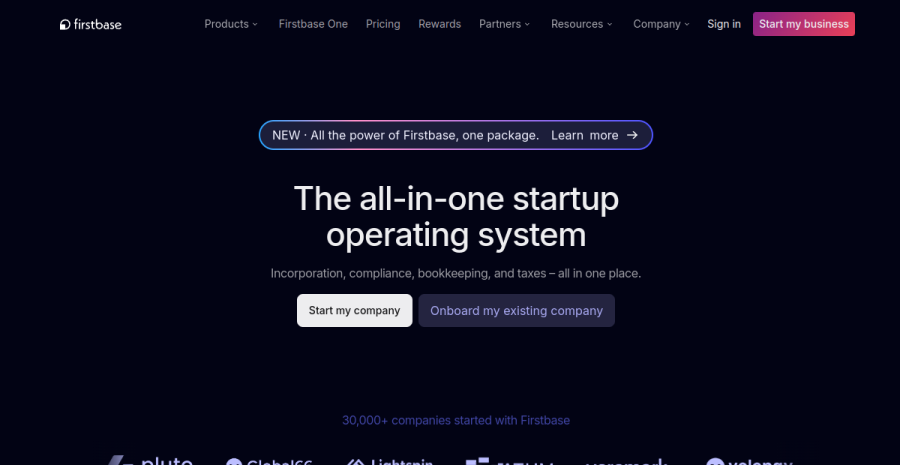
Firstbase forms a US LLC for non-residents and then keeps it compliant — registered agent, state filings, EIN, deadline reminders. It is a common pick for nomadic founders who need Stripe and a US business presence without living in the States.
Best for: location-independent solos selling primarily to US customers or needing US payment rails. Remember: it forms and maintains the entity — it does not change where you are taxed.
doola
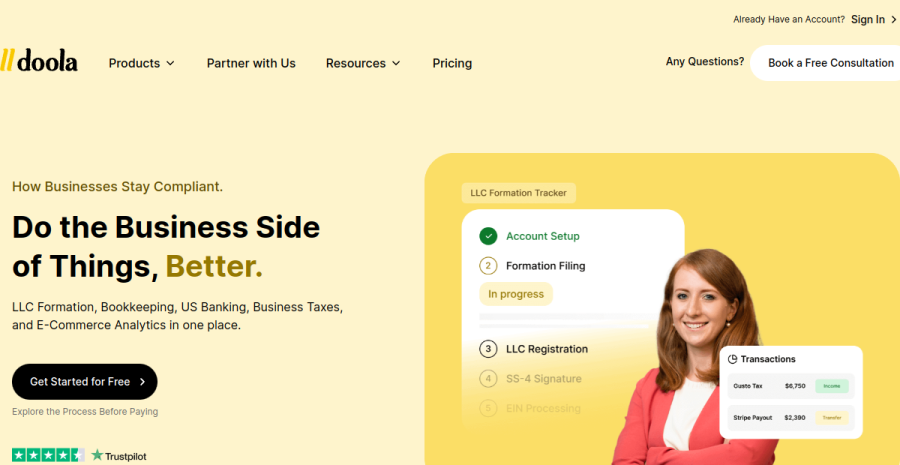
doola covers the same non-resident US-LLC need but leans into the back office: formation plus bookkeeping and US business-tax filings in one place. For a solo who wants the entity and does not want to assemble accounting separately, the bundle is the draw.
Best for: nomads who want the US LLC with compliance and books handled together rather than stitched from separate tools.
I compared both against the EU-company route in the company formation roundup, and the US payment rails that are usually the real motivation — Stripe and the rest — are covered in the payment processors roundup.
The takeaway
A US LLC is a legitimate, useful tool — for the specific solo who sells to America or needs US payment infrastructure. It is not a tax escape, it does not move your residency, and it adds filings rather than removing them. So decide on the job, not the hype:
- Customers and money mostly American, or you need US rails? A US LLC via Firstbase or doola is a clean base.
- Serving your home or EU market? Stay a sole trader or form a domestic company — simpler and cheaper.
- Either way: confirm where you are actually taxed with a US-qualified professional. That question outranks the entity every single time.
The structure is a tool, not a trophy. Pick the smallest one that fits where the business — and your customers — genuinely are.
Part of the complete EU admin guide for solopreneurs.
Frequently asked questions
Should a solopreneur form a US LLC?
Can a non-US resident open a US LLC?
US LLC vs sole proprietor for a freelancer?
Does a US LLC save tax?
Keep reading

From freelancer to solopreneur: how to stop trading time for money (2026)
A freelancer sells hours to clients; a solopreneur builds something that earns without the next hour. The difference is not a title but a set of decisions — about offers, pricing, assets and admin — and most people make the switch gradually. The honest map of the transition, the order that works, and what stays the same.
Passive income ideas for solopreneurs (2026): the honest version
The real leverage-based income ideas for one person — digital products, content and affiliate, micro-SaaS, investing and licensing — with the honest truth about how much upfront work and maintenance each takes, and why "passive" is mostly a myth at the start.
Pricing for international clients as a freelancer (2026): currency, rates & not losing margin
International clients change the pricing maths: which currency to quote in, how to stop FX and fees eating your rate, and why you price to the market and the value — not your home cost of living. A practical, honest guide.
Everything here is free. If something saved you time, you can support the author — no product, no signup.